Wright County Case Study

Wright County Minnesota

From paper to progress: Wright County's digital transformation of abatement services 

Wright County Website

Transforming government abatement services

Located in the Midwest, Wright County's local government provides critical services to families, businesses, and property owners, managing everything from property tax assessments to community planning as the region experiences dynamic growth 

The County’s residents faced a frustrating reality when applying for a property tax reduction or exemption, also known as an abatement. The residents faced paper forms to fill out, long wait times, and a lack of clarity about case progress, all of which contributed to a poor customer experience and a flustered, overwhelmed county team. By implementing Jadu Central Lite with Onbase, Wright County transformed a broken process into clean digital workflows that enhanced collaboration and dramatically improved citizen satisfaction. 

Wright County's transformation is more than a story about technology; it's about restoring the relationship between government and the people it serves.  


The Challenge

Wright County's abatement process was struggling to serve both residents and staff effectively. The lack of visibility and tracking, combined with a reliance on paper-based workflows, left residents frustrated, teams unable to see the whole picture, and processing times stretching far longer than anyone wanted. 

With population growth of 9.2% between 2020-2024 and younger families increasingly moving to the area, expectations for digital government services were rising. Residents like fire damage victims, already dealing with property loss, faced the added burden of navigating a confusing bureaucratic maze with no visibility into when or if they'd receive the tax relief they desperately needed. 

Internally, staff had difficulty determining where applications were between the Assessor's office and Taxpayer Services. Applications were lost or misfiled with staff having to physically search for documents, and some were denied at year-end simply because the required documentation was never received. Processing took 30-34 weeks, and the county lacked the capacity to track volumes, outcomes, or financial impacts. The manual process made it impossible to provide real-time status updates, forcing residents to call repeatedly or wait in long queues in the hope of getting the information they needed. 

The Solution

Wright County implemented Jadu Central Lite with OnBase to create a seamless, transparent abatement process.

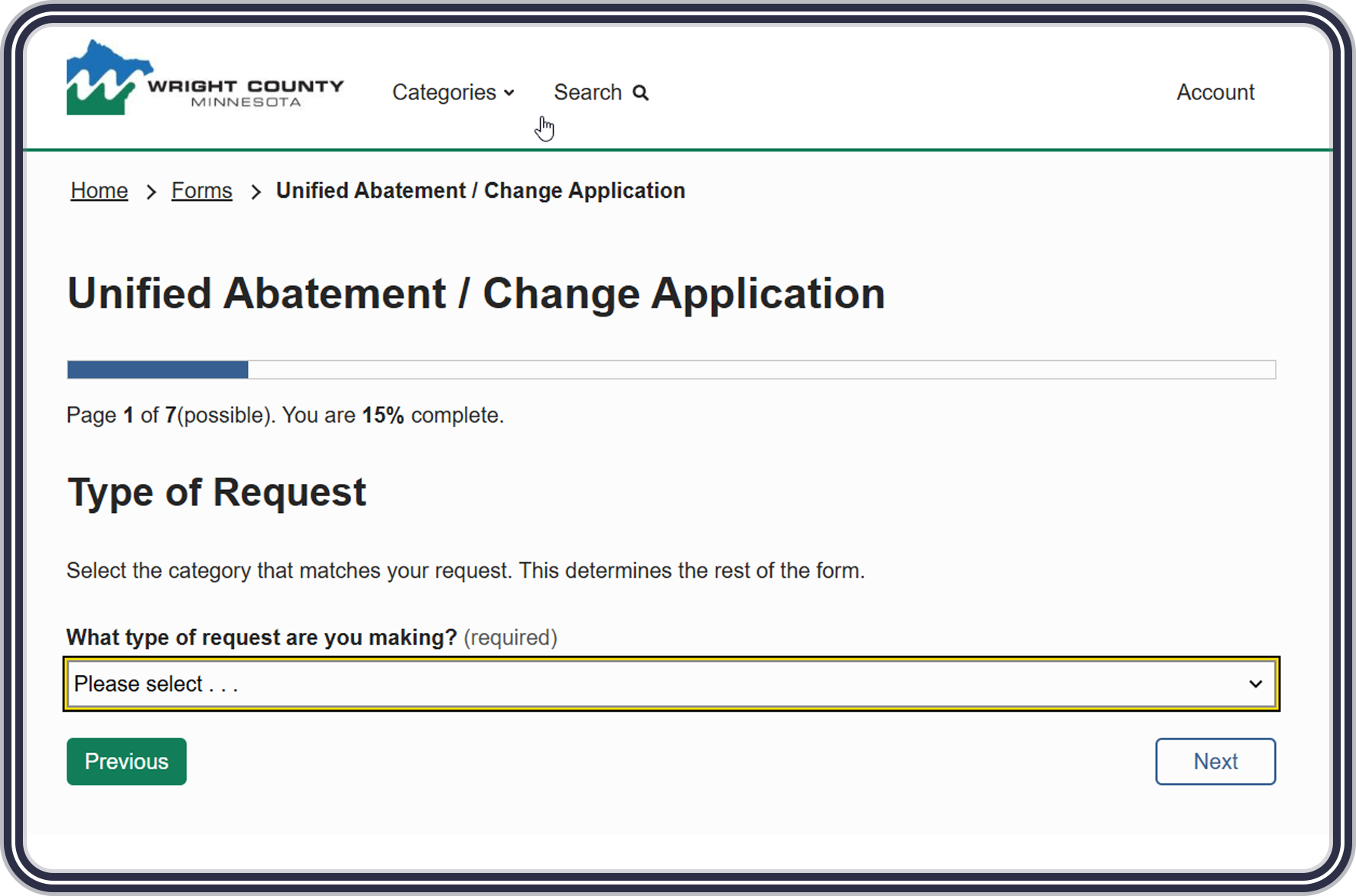
The solution included an online self-service portal where residents could submit applications and upload required documentation from home at a time convenient for them. Digital forms also ensured complete and accurate submissions, eliminating the problematic applications that previously stalled the process. 

The platform provided unified case management with shared visibility between the Assessor's office and Taxpayer Services. All documents were automatically organized into digital case packets, with clear date stamps that track each lifecycle stage. Staff from both departments could instantly see application status, enabling flexible case processing and better workload management. 

Residents can now check the progress of their cases through the portal, accessing the information they need when they need it. They could see what documentation had been received and what stage their application had reached. When they called or visited, staff from either department could provide immediate, accurate updates without having to transfer calls. The system also delivered the county's first comprehensive reporting capabilities, enabling managers to track processing volumes, approval rates, timelines, and financial impacts. 

Wright county image of website form

Processing times have already been reduced from 30-34 weeks to as little as 8 weeks, which is around a 75% reduction in turnaround time.  

Early outcomes five months after implementation

The Results

Early outcomes from the first five months demonstrate significant improvement. Wright County is already seeing clear signs of the transformative impact the Jadu digital platform will have on its abatement service and the experience it provides residents.  

Citizen satisfaction is projected to improve significantly by offering faster resolution time in high-stress situations. The ability to track cases online will eliminate much of the frustration people experience today and help restore their trust in county services.  

On the operational side, Wright County are already seeing improved staff collaboration and the ability to cover workloads. This has empowered teams to serve citizens in the most effective way possible. By catching missing documentation early, the county will prevent those disappointing year-end denials and avoid wasting everyone's time.  

Perhaps most exciting, county leadership will finally have access to real data on program performance, giving them the insights they need to drive continuous improvement. 

By embracing digital innovation, the county has shown that modernizing processes isn't just about efficiency; it’s about effective collaboration, transparency and meeting residents where they are. As communities across the globe face similar challenges of growing populations and rising expectations, Wright County stands as proof that thoughtful digital transformation can rebuild trust, empower staff, and create government services that truly work for everyone. This is the future of public service: responsive, accessible, and deeply human.